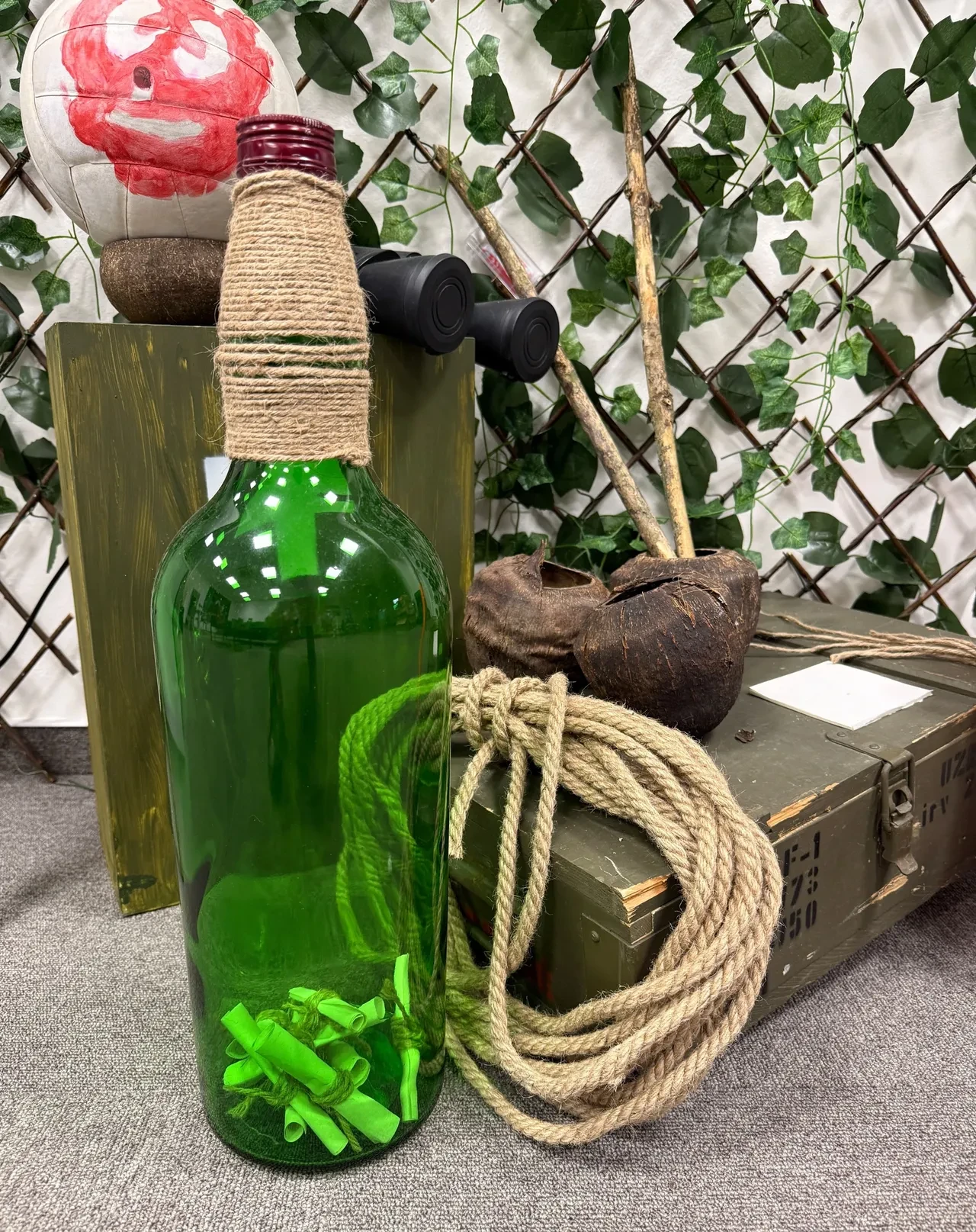
Recently, I was able to visit the dev team in Prague. I had visited last year when we formed the studio and everything kicked off but since then more positions had been filled and there were a lot of new faces. We work together every day, but it's hard to beat some real face time. Everyone was invited to the North Beach office in Prague where we held a mini summit. When we arrived, we were greeted by a cool themed display that Nikki (our Director of Marketing) and the team had put together:
Over the next two days we covered a lot of topics. I expanded on the vision and goals for the next game, talking about where we started with SD1, some of the challenges and lessons learned, and where we're taking Stranded Deep with SD2 and beyond. The presentations from our leads led to great discussions and insights that really helped us align as a team. We covered so much, but I also felt that I could've spoken for another two days …maybe next time.
There was time for some fun team building activities outside of the office. If you haven't played Blood on the Clocktower, I'd recommend it! Overall, it felt like the team grew closer and came away super energized for the project and what we're building together.
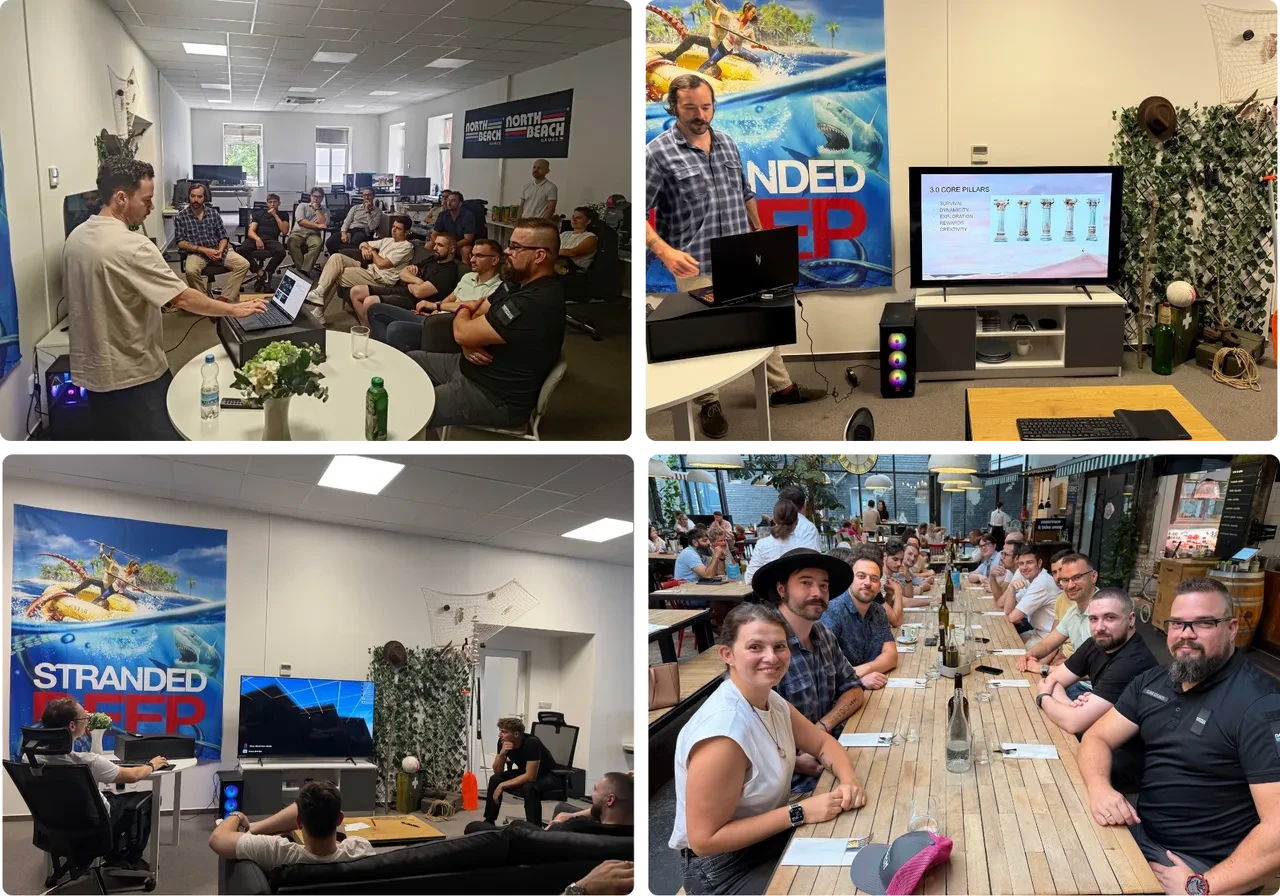
We spent some down time getting the new coffee machine working (mission critical) and bouncing around more ideas. We also used the time to reflect on the progress of our game mechanics, like the building system.
Building Beyond Survival
Previously, I talked about our experiments with the building system and how we've finally landed on a version that we feel is the right direction for SD2.
The building system in SD1 worked pretty well and was a solid base. It was easy to understand and not overly complicated, but there were definitely ways it could be expanded and improved. How should we do that?
Our goal for the new building system is to be familiar but better in every way. Building "2.0". It needs to be intuitive and not get in the way, and it should enable more personalization. Ultimately, the building system should give you the tools to showcase your creativity.
We experimented with a lot of different ideas. Writing about it now brings to mind an (alleged) quote from the artist Michelangelo talking about his sculpture 'David': "You just chip away the stone that doesn't look like David." We've spent a lot of time experimenting with ideas and chipping away the ones that don't feel like Stranded Deep. Some ideas were cool but didn't fit our style of game. Some were too fine-grained and/or wouldn't scale well. Even though these versions were discarded, the best elements from each version have made it into our current version–like custom material selection and a blueprint system allowing you to save your favorite creations to deploy again somewhere else. We're well on our way to creating building 2.0.
Primitive to Polished
One aspect I wanted to improve was the appearance of the different building tiers, enabling you to progress from building very crude structures to very refined structures that have clean, sharp edges. SD1 had different visual tiers but the final tier was still pretty rough. In SD2 we want you to have a stronger feeling of accomplishment as you progress from building stick shacks to stone mansions. Being able to build something refined from quality materials should be a milestone in your survival journey and represent mastery of the environment around you.
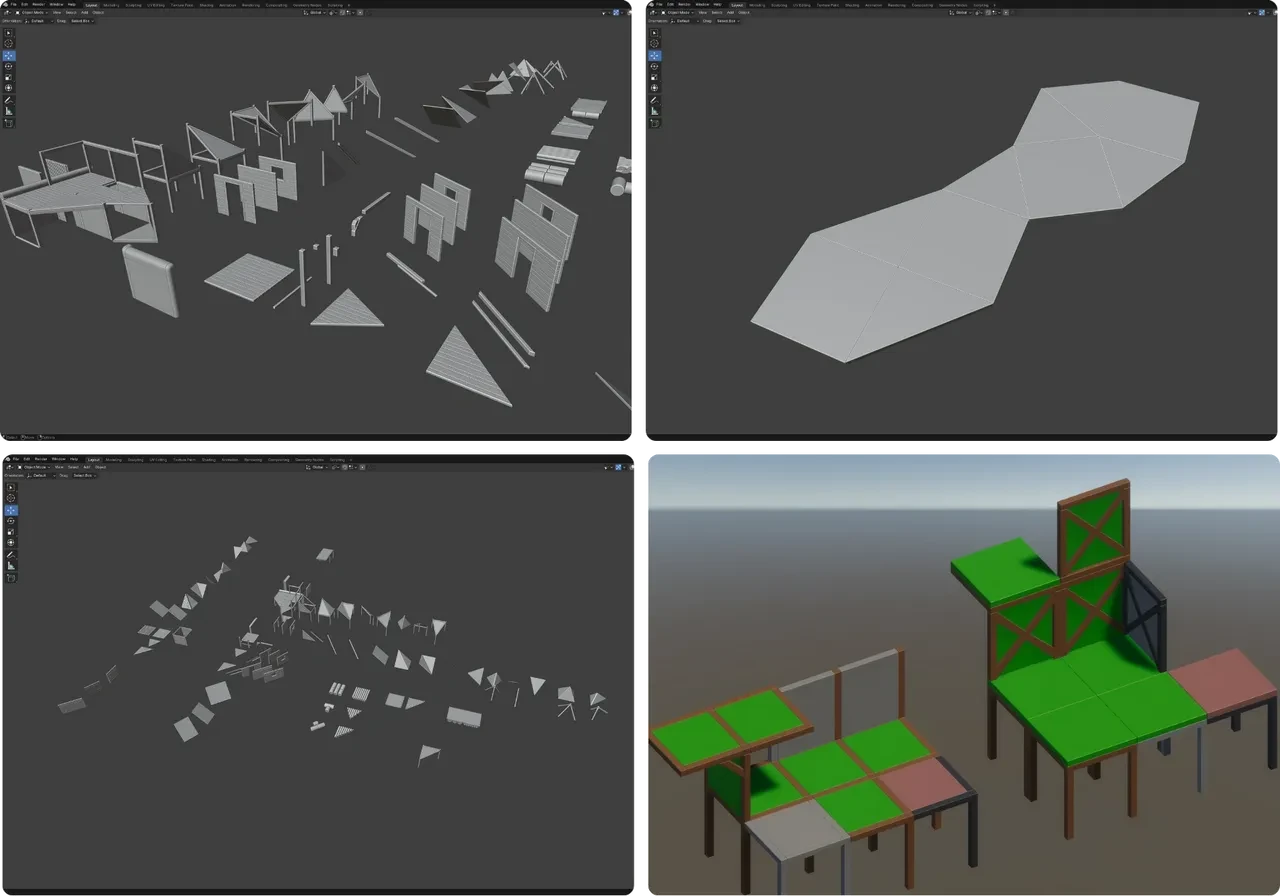
To make this a reality, our art director Csaba and lead designer Prokop set about blocking out the shapes and experimenting with the geometry. There are a lot of edge cases to solve with potential gaps, overlaps, overhangs, and no perfect solution. It's very much a case of deciding where to put the compromises so it looks the most visually satisfying. Below are some examples of possible shapes and WIP experiments moving problems to different areas:
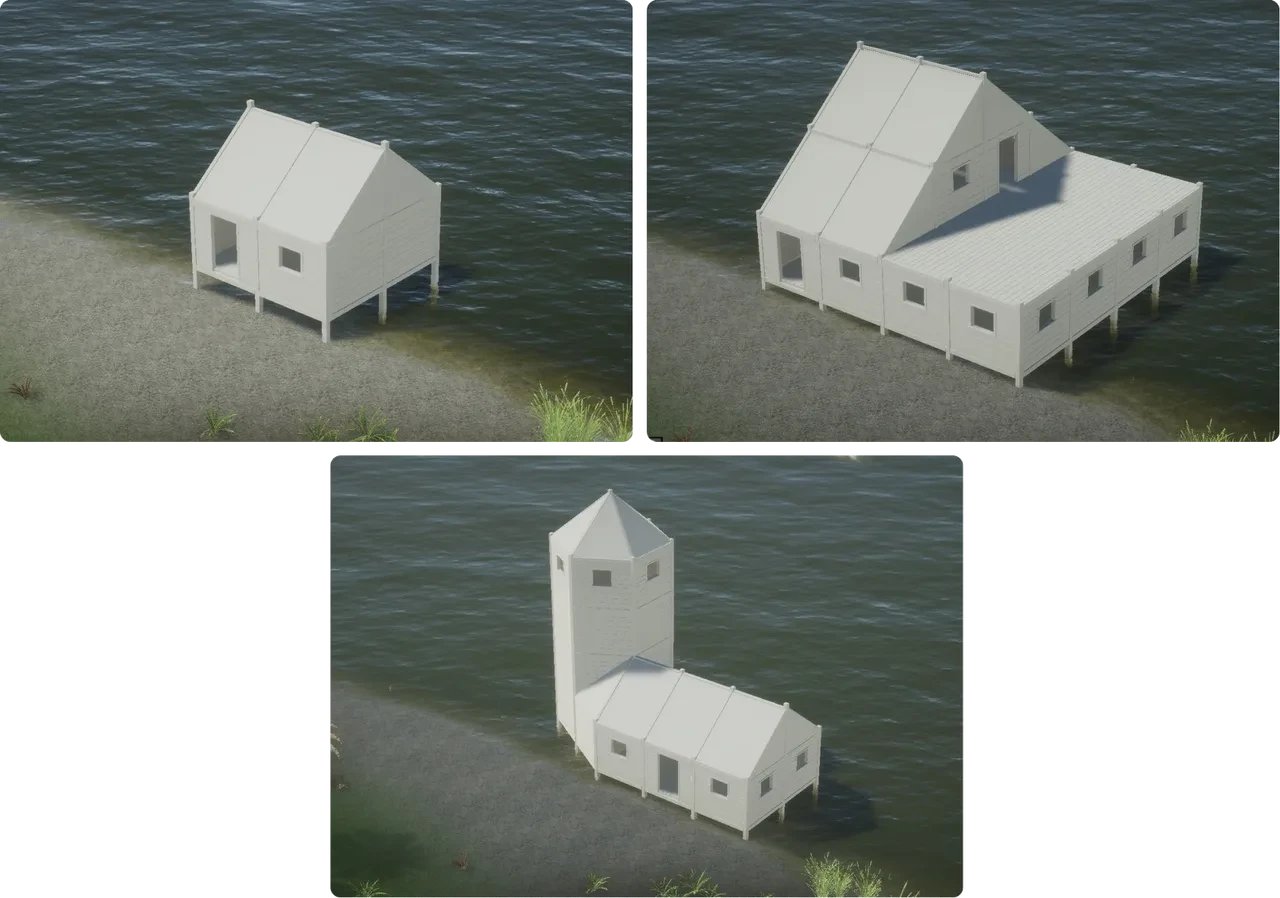
And below are some examples of Csaba testing what's possible using the shapes in our current version:
Sticks and Stones
In SD2, we're breaking down everything you can craft into key components and letting you choose what material to use for each component. This is a big shift from the usual paradigm; Instead of defining combinations using specific materials, combinations are defined using types of materials. Building pieces have key components like: framing, some type of fill material, and a binding material. So for a foundation, you will require x framing materials, x fill materials and x binding materials instead of x sticks and x rope. Framing materials could be: sticks, logs, rocks, planks, etc. You get the idea. You'll be able to choose the material for each of these key components, giving you a lot of control over the appearance and stats. As you progress deeper into the world you'll find new materials, including rare and exotic materials if you venture far enough. This is a work-in-progress and we're prototyping multiple versions of this mechanic to see what works best across crafting, building, and even cooking.
There will be a lot of variety within these shapes–from crude panels fashioned out of sticks, palm fronds, and rope to refined timber planks neatly fixed with resin, all the way up to materials like stone and plaster. We need to finalize the possible materials and combinations that make sense with the resources available in the world, but there's a lot of potential.
An important step in creating these new building pieces will be choosing what materials to use.
Dock It Like It's Hot
Another major improvement is the ability to build bigger and better rafts. This was a highly requested feature in SD1. Now, any building piece that you can place on a foundation can also be placed on a raft, making it possible to build large house boats and mobile bases. This opens up new strategies for surviving on land and water. There will be new challenges on the water so you'll need to build a capable raft to survive. You may even need to think about things like the size and durability of your raft if you want to access certain areas.
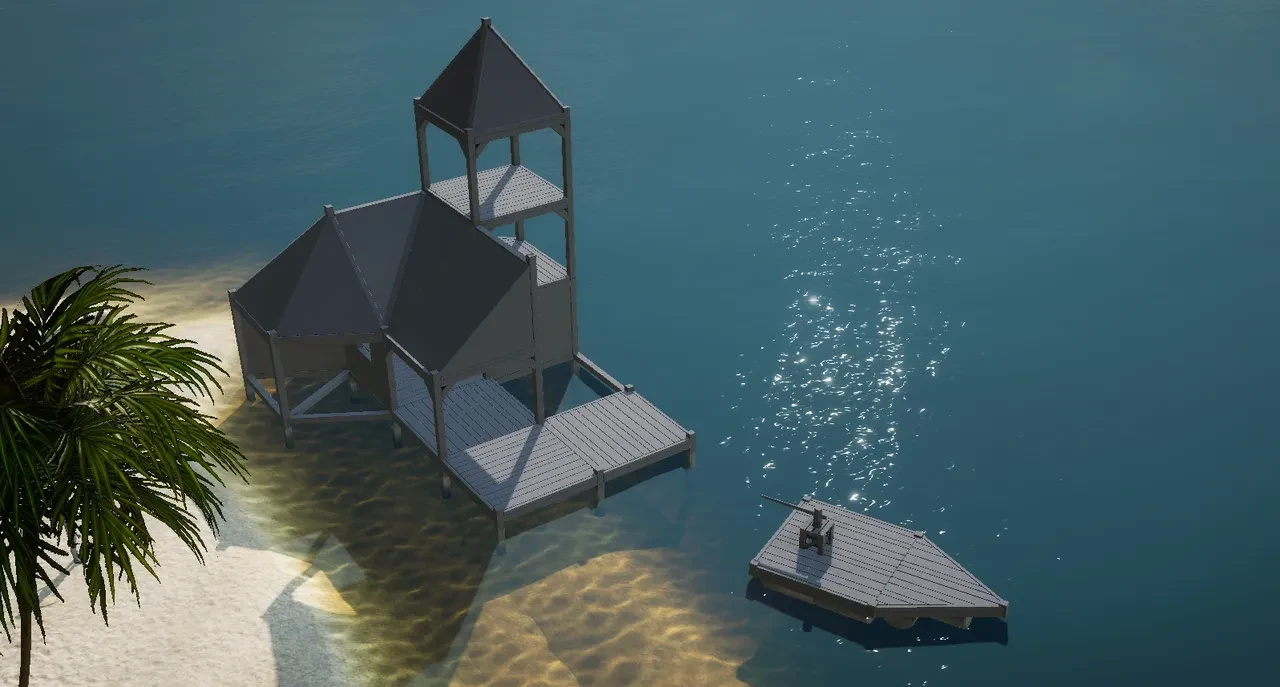
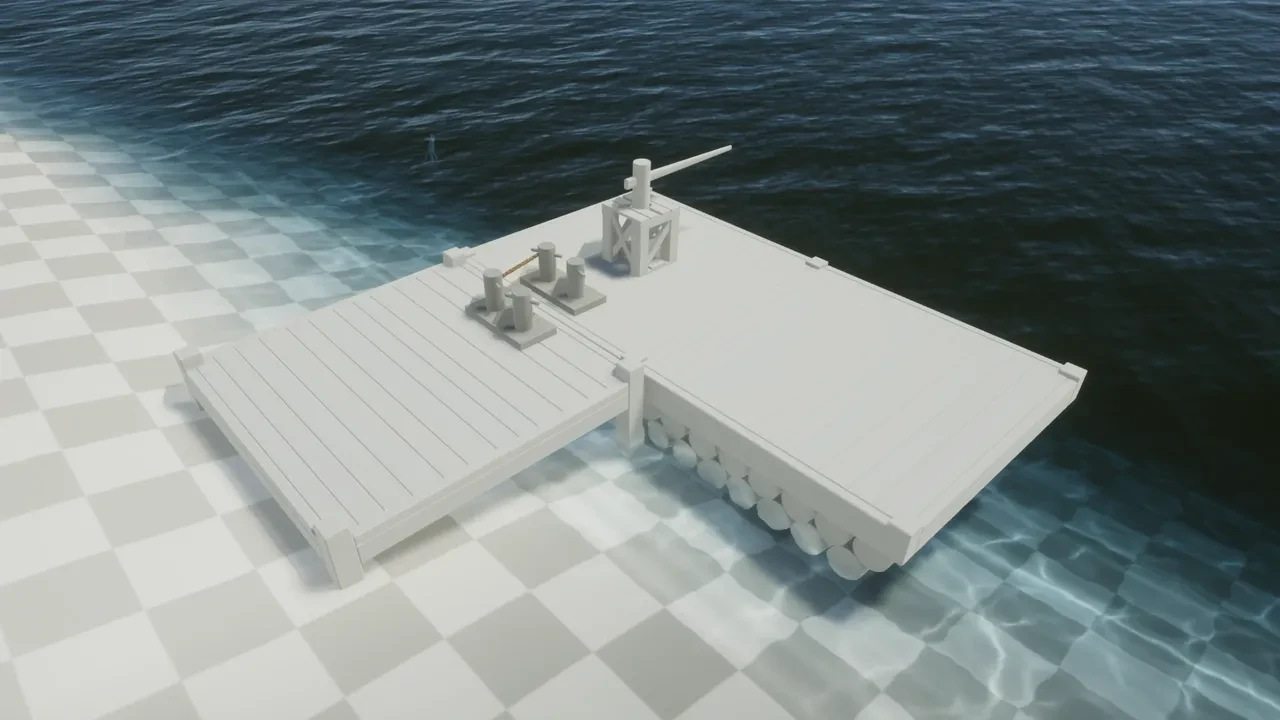
A pain-point in SD1 when building a raft was needing to drag it around and find a position where there were no obstructions to attach new pieces and make it bigger. To improve the experience in SD2 we're adding a new item – the Bollard:
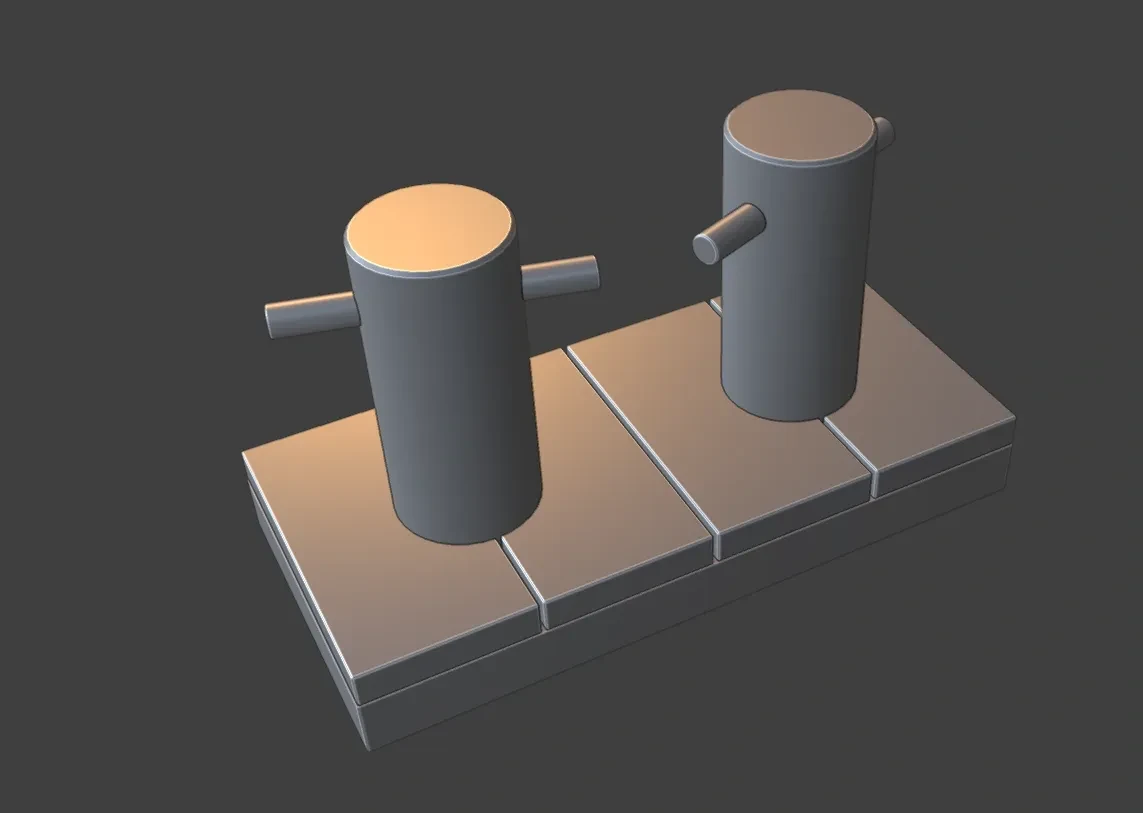
If you place a bollard on your raft and another bollard on a foundation or the terrain it will allow you to moor your raft with a rope. This makes raft building a lot easier and will also help you not lose your raft! This is just one of the small but meaningful ways we're making things smoother and improving quality-of-life while you try to survive.
Challenges
While we're making great progress, there's plenty of problems to solve along the way. I talked earlier about the tricky geometry; another challenge we're working on is how resources are used for building. We made an early decision that the amount of resources required to build something should roughly represent the final product. This means that you receive 4x real logs when you chop down a palm tree–not 100 units of a wood resource–and building a foundation requires 4x logs at minimum. You can see that you'll need a lot of large resources to build! Large resources take more time to gather and take up more space in your inventory. The challenge is balancing this so gathering doesn't get grindy and transportation doesn't become frustrating.
With this in mind, we're testing two styles of building placement:
One version lets you quickly plan the layout of your structure using ghosts. In this version you don't need to have the resources available to place a ghost. This allows you to visualize what you want to build and confirm that it works without obstructions. You then add resources to the individual ghosts to complete the construction. However, it introduces questions like: Should ghosts have colliders? If yes, how do you prevent using ghosts as a hack to access areas? If not, is it OK that players can't reach upper levels to plan out multi-story structures?
The second version requires you have the resources available in your inventory or in close proximity before you can place the building piece, similar to how building worked in SD1. This works but suffers from the resource management issues I mentioned. It was also common for players in SD1 to find they couldn't complete a structure the way they had planned due to some random obstruction in the environment. But, this version also introduces questions like: How do you prevent a raft base from floating off into the distance after being placed? ...should we prevent things like this?
Let us know your thoughts – which version do you prefer?
Challenges aside, the building system is coming together nicely and I'll follow up with our progress in a future blog.
Message In a Bottle
The dev team is currently transitioning from prototyping to production workflows. They're doing lots of research into how to build the best game possible, investigating how to get good performance from the engine and evaluating best solutions for systems like multiplayer and sharing user-created content across platforms.
Our new hero animal is almost complete so we're getting started on the animation pipeline. The initial shortlist of animals that will be in the game at release has been feature locked, and the environment biomes are close behind.
We're continuing to develop the underlying plot that will ground our protagonist in the setting. This is a light narrative framework that's just enough to make the world coherent without turning it into a heavy story game. This includes building out our 'proto-culture' and the possible antagonists that might be responsible for all of the weird and wonderful things you'll be able to discover in SD2!
And finally, to wrap up this blog there's one more thing I wanted to share from our Prague visit – our 'message in a bottle' for each team member to add a message to the bottle which we'll open when SD2 launches. Some team members have already added theirs with more to come as the project and team grows. This is very on theme for SD and I can't wait to open it!
-Stay Alive!